
Introduction
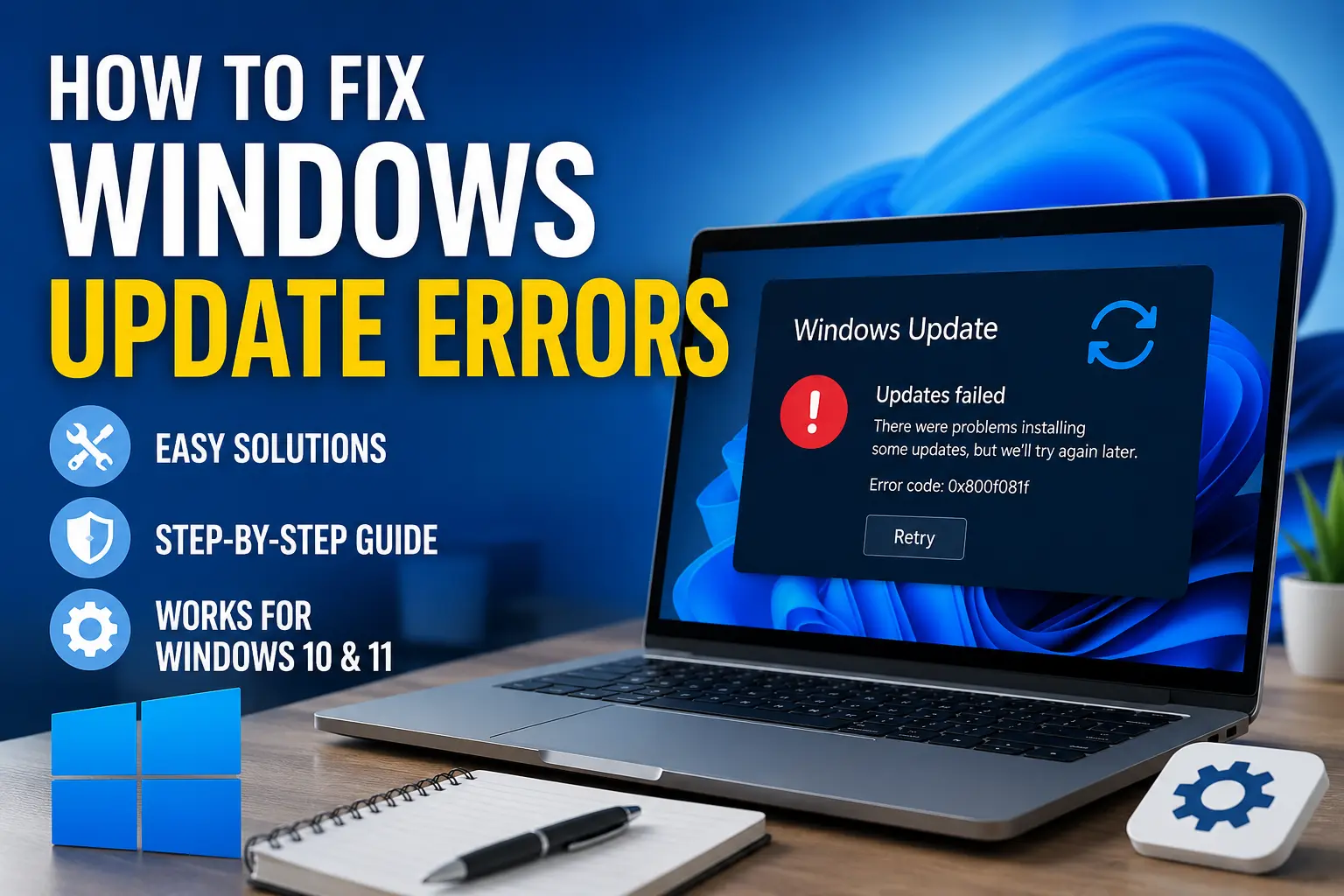
Windows updates are important for keeping your computer secure, stable, and running smoothly. They often include security patches, bug fixes, driver updates, and new features. But sometimes updates fail to install, get stuck, or show error messages that are difficult to understand.
A failed Windows update can cause real problems. Your PC may restart repeatedly, run slower than usual, or become vulnerable to security risks. In some cases, certain apps or drivers stop working properly after an incomplete update.
The good news is that most Windows update errors can be fixed without advanced technical skills. Whether you’re seeing error codes, stuck downloads, or endless update loops, there are several proven methods that can solve the issue.
This guide explains the most common causes of Windows update problems and provides step-by-step solutions that beginners can follow easily.
Main Causes
Before fixing the problem, it helps to understand why Windows update errors happen in the first place.
Corrupted Update Files
Windows stores temporary update files while downloading and installing updates. If these files become corrupted, the update process may fail or freeze.
Poor Internet Connection
A weak or unstable internet connection can interrupt downloads. Even small interruptions may cause update files to become incomplete.
Insufficient Storage Space
Large Windows updates require free disk space. If your system drive is almost full, updates may fail during installation.
Conflicting Drivers or Software
Some antivirus programs, outdated drivers, or third-party tools can interfere with Windows Update services.
Disabled Windows Services
Windows updates depend on background services like Windows Update and Background Intelligent Transfer Service (BITS). If these services are stopped or disabled, updates may not work correctly.
Step-by-Step Solutions
Here are the most effective methods to fix Windows update errors.
Run the Windows Update Troubleshooter
Windows includes a built-in troubleshooter designed specifically for update issues.
Steps:
- Open Settings
- Go to System
- Click Troubleshoot
- Select Other troubleshooters
- Find Windows Update
- Click Run
The troubleshooter will automatically scan for problems and attempt to fix them.
After the process finishes, restart your computer and try updating again.
Restart Your Computer
This may sound simple, but restarting can clear temporary glitches that block updates.
Steps:
- Save your work
- Restart your PC
- Open Settings > Windows Update
- Click Check for updates
If a pending restart was preventing the update, this often solves the issue.
Check Your Internet Connection
A stable connection is necessary for downloading updates properly.
Try these quick checks:
- Restart your router
- Switch from Wi-Fi to Ethernet if possible
- Pause large downloads or streaming
- Run an internet speed test
Once your connection is stable, retry the update.
Free Up Disk Space
Windows updates need enough room to download and install files.
How to free storage:
- Open Settings
- Go to System > Storage
- Remove temporary files
- Empty the Recycle Bin
- Uninstall unused programs
Aim to keep at least 20 GB of free space available on your system drive.
Restart Windows Update Services
Sometimes update services stop working in the background.
Steps:
- Press Windows + R
- Type
services.msc - Press Enter
Now locate these services:
- Windows Update
- Background Intelligent Transfer Service (BITS)
For each service:
- Right-click it
- Select Restart
Then try updating again.
Clear the Windows Update Cache
Corrupted update cache files are one of the most common reasons updates fail.
Steps:
- Open Command Prompt as Administrator
- Type the following commands one by one:
net stop wuauserv
net stop bits
- Open File Explorer and go to:
C:\Windows\SoftwareDistribution
- Delete all files inside the folder
- Return to Command Prompt and type:
net start wuauserv
net start bits
- Restart your PC
This forces Windows to create fresh update files.
Repair Corrupted System Files
Damaged system files can interfere with updates.
Run SFC Scan
- Open Command Prompt as Administrator
- Type:
sfc /scannow
- Press Enter
The scan may take several minutes. If corrupted files are found, Windows will attempt to repair them automatically.
Run DISM Tool
If SFC doesn’t fully solve the issue, use DISM.
Type these commands one at a time:
DISM /Online /Cleanup-Image /CheckHealth
DISM /Online /Cleanup-Image /ScanHealth
DISM /Online /Cleanup-Image /RestoreHealth
Restart your computer after completion.
Advanced Fixes
If basic methods do not work, try these deeper solutions.
Install Updates Manually
You can manually download updates from Microsoft’s official catalog.
Steps:
- Open Settings > Windows Update
- Note the update KB number
- Visit the Microsoft Update Catalog
- Search for the KB number
- Download the correct version
- Install it manually
This is useful when automatic installation repeatedly fails.
Reset Windows Update Components
Resetting all update components can solve persistent problems.
Open Command Prompt as Administrator and run:
net stop wuauserv
net stop cryptSvc
net stop bits
net stop msiserver
Then rename update folders:
ren C:\Windows\SoftwareDistribution SoftwareDistribution.old
ren C:\Windows\System32\catroot2 catroot2.old
Restart the services:
net start wuauserv
net start cryptSvc
net start bits
net start msiserver
Restart your computer afterward.
Update Device Drivers
Outdated drivers can sometimes block Windows updates.
To update drivers:
- Right-click the Start button
- Open Device Manager
- Look for devices with warning icons
- Right-click the device
- Select Update driver
Pay special attention to graphics, network, and storage drivers.
Perform a Clean Boot
A clean boot starts Windows with minimal background services.
Steps:
- Press Windows + R
- Type
msconfig - Press Enter
- Open the Services tab
- Check Hide all Microsoft services
- Click Disable all
- Open the Startup tab
- Click Open Task Manager
- Disable startup apps
- Restart your PC
Now try the update again.
Use System Restore
If updates recently started failing, restoring your system to an earlier point may help.
Steps:
- Search for Create a restore point
- Open System Restore
- Choose a restore point before the issue started
- Follow the on-screen instructions
This will not delete personal files but may remove recently installed apps or drivers.
Tips to Prevent the Issue
Preventing update errors is easier than fixing them repeatedly.
Keep Enough Free Storage
Avoid filling your system drive completely. Regularly delete temporary files and unused apps.
Restart Your PC Regularly
Frequent restarts help Windows apply pending updates and clear temporary glitches.
Avoid Interrupting Updates
Do not force shutdown your computer during updates. Interruptions can corrupt system files.
Keep Drivers Updated
Install updated drivers from trusted manufacturers to reduce compatibility issues.
Use Reliable Antivirus Software
Some aggressive antivirus programs block updates. Use trusted software and keep it updated.
Maintain a Stable Internet Connection
Large updates download more reliably on stable broadband connections.
FAQs
Why does Windows Update keep failing?
Windows updates usually fail because of corrupted files, insufficient storage, internet problems, or disabled update services.
Is it safe to delete the SoftwareDistribution folder?
Yes. Deleting the contents of the SoftwareDistribution folder is generally safe because Windows automatically recreates the files when checking for updates again.
What should I do if Windows Update gets stuck at 0%?
Restart your computer first. If the problem continues, run the Windows Update Troubleshooter and check your internet connection.
Can antivirus software block Windows updates?
Yes. Some antivirus programs interfere with update installations. Temporarily disabling the antivirus may help identify the issue.
How long should a Windows update take?
Most updates finish within 15 to 60 minutes, depending on update size, hardware speed, and internet connection.
Conclusion
Windows update errors can be frustrating, especially when your computer refuses to install important updates. Fortunately, most update problems have straightforward solutions that anyone can try at home.
Start with simple fixes like restarting your PC, checking your internet connection, and running the built-in troubleshooter. If the issue continues, clearing the update cache, repairing system files, or resetting update components usually solves the problem.
Keeping your system clean, updated, and properly maintained can also reduce the chances of future update failures. With the methods in this guide, you should be able to fix most Windows update errors and keep your computer running smoothly.
